Showing posts with label lessons. Show all posts

Monday, April 10, 2017

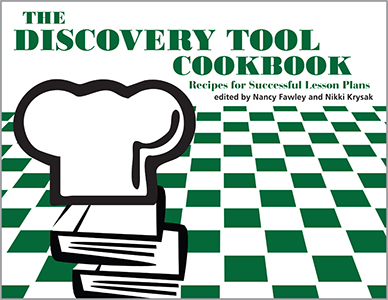
The Discovery Tool Cookbook


The Discovery Tool Cookbook: Recipes for Successful Lesson Plans, edited by Nancy Fawley and Nikki Krysak. ACRL, 2016. 978-0-8389-8891-6.

Publisher's Description
The Discovery Tool Cookbook: Recipes for Successful Lesson Plans, edited by Nancy Fawley and Nikki Krysak, showcases tested lessons by librarians and practitioners for teaching information literacy using a discovery tool. The third volume in the successful ACRL Cookbook series features “recipes” sorted by lesson type and level of student preparedness, including all the information needed to replicate (or customize) each dish at your own institution. The IL Framework is infused in each of the 49 lessons, which suit a mix of abilities, learning outcomes, and patron types, including K-12 and ELL students, with options for flipping instruction to maximize learning outside of the classroom.

The Discovery Tool Cookbook is essential for all academic and school librarians wanting to create fun lesson plans that incorporate a discovery layer.

More Information
See the publisher's website for Table of Contents and editor information.

Monday, March 30, 2015

Think Tank Library Grades K-5


Boyd Ratzer, M., & Jaeger, P. (2015). Think Tank Library: Brain-Based Learning Plans for New Standards, Grades K-5. Santa Barbara, CA: Libraries Unlimited. ISBN: 978-1-61069-990-7

Publisher's Description
Transform your library into a "think tank" by helping teachers create an active learning environment in which students question, investigate, synthesize, conclude, and present information based on Common Core standards.

The rigors of today's mandated academic standards can repurpose your library's role as a steward of the Common Core State Standards (CCSS) at your school. This guide will help you help teachers present exciting, field-tested lessons for elementary grades K through 5, addressing developmental steps and individual differences in key competencies in the CCSS. Authors and educators Mary Ratzer and Paige Jaeger illustrate how brain-based learning helps students become deep, critical thinkers and provide the lesson plans to coax the best thinking out of each child.

This tool book presents strategies to help learners progress from novice to expert thinker; challenge younger students with questions that lead to inquiry; incorporate "rigor" into lessons; and use model lesson plans to change instruction. Beginning chapters introduce the basics of instruction and provide ideas for expert cognitive growth of the brain. Sample lessons are aligned with key curriculum areas, including science, social studies, music, art, and physical education. 

Features
  • Includes relevant, rigorous, fun, and field-tested lesson plans for multiple disciplines
  • Provides reproducible pages to allow librarians and teachers to easily use a lesson
  • Offers a K–5 scaffolding approach to teaching information literacy skills
  • Features graphical illustrations and practical schemas that explain, illustrate, and model how brain-based learning works


Table of Contents: 

Introduction: Why Thinking?
Chapter 1: Thinking and the Culture of Your School
Chapter 2: 22 Ideas for Turning Your Library Into a Think Tank
Chapter 3: Think Tank Libraries and Inquiry
Chapter 4: Thinking and the Common Core
Chapter 5: Wanted: Expert Thinkers
Chapter 6: If the Brain Could Talk
Chapter 7: Thinking and Information Literacy
Chapter 8: Thinking in ELA
Chapter 9: Thinking and Text Dependent Questions
Chapter 10: Thinking in Social Studies
Chapter 11: Thinking in Math
Chapter 12: Thinking in Science
Chapter 13: Think Tank Lessons
Chapter 14: The Primary Learning Years
Chapter 15: Primary K-2 Library and Classroom Lessons
Chapter 16: The Elementary Discovery Grades (3-5) Library and Classroom Lessons
Chapter 17: Think Tank Starter Kits: Lesson Building Block Ideas
Appendix
Bibliography
Index
Think Tank Library Grades 6-12


Boyd Ratzer, M., & Jaeger, P. (2015). Think Tank Library: Brain-Based Learning Plans for New Standards, Grades 6-12. Santa Barbara, CA: Libraries Unlimited. ISBN: 978-1-61069-988-4

Publisher's Description
Transform your library into a "think tank" by helping teachers create an active learning environment in which students question, investigate, synthesize, conclude, and present information based on Common Core standards.

The rigors of today's mandated academic standards can repurpose your library's role as a steward of the Common Core State Standards (CCSS) at your school. Created for teachers of grades 6 through 12, this guide will help you help present exciting, field-tested lessons that address developmental steps and individual differences in key competencies in the CCSS. Authors and educators Mary Ratzer and Paige Jaeger illustrate how brain-based learning helps students become deep, critical thinkers, and provide the lesson plans to coax the best thinking out of each child.

This tool book presents strategies to help learners progress from novice to expert thinker; challenge students with questions that lead to inquiry; incorporate "rigor" into lessons; and use model lesson plans to change instruction. Beginning chapters introduce the basics of instruction and provide ideas for expert cognitive growth of the brain. Sample lessons are aligned with key curriculum areas, including science, social studies, music, art, and physical education.

Features
  • Provides diverse, brain-friendly, and field-tested lesson plans that feature thinking targets, texts, and standards and enhance students' deep thinking skills
  • Presents a school-library focus driven by inquiry process and information literacy skills
  • Features graphical illustrations and practical schemas that explain, illustrate, and model how brain-based learning works
  • Includes an extensive, research-based bibliography

Wednesday, December 31, 2014

Leading the Common Core Initiative


Harvey II, C. A., & Mills, L. L. (2015). Leading the Common Core Initiative: A Guide for K-5 School Librarians. Santa Barbara, CA: Libraries Unlimited. ISBN: 978-1-61069-491-9

Publisher's Description
Defining both the Common Core Standards and the school librarian's role in their implementation, this book offers ready-to-use lesson plans and other tools for grades K–5 and identifies opportunities for collaborative teaching.

As elementary schools in nearly all 50 states are faced with meeting the Common Core State Standards (CCSS), school librarians need to understand the challenges and have lesson plans ready to help. This resource introduces the CCSS in English and mathematics to K–5 librarians and aides, helping them to understand the concepts, analyzing the impact on the school library, and providing lesson plans, resources, and other tools for implementation in integrated instruction with other curricula and collaborative teaching with other elementary teachers. Based upon the authors' own experiences in adopting the CCSS in their school, the included exemplar lesson plans and ideas are designed to support school librarians as they begin to collaborate with teachers in using the Common Core Standards in their daily classroom instruction. The book also discusses the opportunities for advocacy that result from the librarian's instrumental role in implementing the CCSS, both as a staff developer and a collaborative partner teacher.

Features
  • Defines the Common Core State Standards in English and mathematics
  • Draws parallels to American Association of School Librarians (AASL) standards
  • Discusses the impact of the CCSS on specific aspects of library administration, such as policies and collection management
  • Examines how CCSS affects classroom and collaborative instruction in the library
  • Identifies opportunities for the librarian to help in staff development in the CCSS

Tuesday, December 30, 2014

Teaching the Scientific Literature Review

Schmidt, R. K., Smyth, M. M., & Kowalski, V. K. (2014). Teaching the Scientific Literature Review: Collaborative Lessons for Guided Inquiry (2nd ed.). Santa Barbara, CA: Libraries Unlimited.
ISBN: 978-1-61069-739-2

Publisher's Description
An essential resource for teachers and librarians who work with students in the later high school years through college and graduate school levels, this book explains and simplifies the scholarly task of researching and writing a scientific literature review.

This thoroughly updated and revised follow-up to the popular text Lessons for a Scientific Literature Review: Guiding the Inquiry is designed for pre-collegiate and early collegiate educators in the sciences, high school and college librarians, curriculum directors and common core supervisors, school district leaders, and principals. The book provides step-by-step guidance on instructing students how to perform the necessary research and successfully integrate newly acquired information into a high-quality final product.

In addition, you'll find an emphasis on using quantitative science research reports as well as white papers discussing more theoretical science topics, a student timeline for assignments, and a handout specifically for students working on writing a scientific literature review. More than 20 workshops/lessons that are aligned to standards dealing with digital literacy, information handling, research, and textual interpretations and representation are provided. The book allows you to easily adapt it for use of investigation of subjects in the humanities, and for the teaching of an extended essay.

Features
  • Teaches the Information Search Process (ISP) of Carol Kuhlthau through carefully designed workshops that guide students through the inquiry process
  • Encourages inquiry into science-based subjects by directing students towards a topic of personal interest linked to those studied in their science class
  • Aligns instruction on researching and writing a scientific literature review with the Common Core State Standards
  • Covers use of databases, general press articles, peer-reviewed studies, white papers, and creating tables, charts, and graphs

Beyond the Textbook


Bernadowski, C., Del Greco, R., & Kolencik, P. (2013). Beyond the Textbook: Using Trade Books and Databases to Teach Our Nation's History, Grades 7–12. Santa Barbara, CA: Libraries Unlimited. ISBN: 978-1-61069-037-9

Publisher's Description
This collection of standards-based lessons will guide middle and high school teachers while teaching the nation's history in a user-friendly, ready-made fashion.

During a time of standards-based instruction, Beyond the Textbook: Using Trade Books and Databases to Teach Our Nation's History, Grades 7–12 will fill the gap in today's middle and high school classrooms to simultaneously engage students in effective literacy skill exercises and teach our nation's history. Authored by three experienced former public school teachers, these ready-made lesson plans for classroom teachers and school librarians make planning easy for implementation in a social studies, history, or English classroom.

The book covers topics from Native Americans to the Louisiana Purchase, offering evidence-based reading strategies throughout that can hold adolescents' attention and develop their vocabulary and comprehension. Each chapter will include bibliographic information; suggested grade level; Information Literacy and National Social Studies Standards; before, during, and after reading strategies; database integration for classroom use; and suggested readalikes. Users will find the standards and evidenced-based research perfectly applicable in today's classrooms.

Highlights
  • Incorporates research-based instruction within standards-based lessons that utilize historical fiction trade books to teach American history
  • Includes ready-to-teach lessons educators can immediately put to use
  • Highlights predetermined vocabulary study words
  • Supplies ready-to-use assessment tools

Using Primary Sources


Bahde, A., Smedberg, H., & Taormina, M. (Eds.). (2014). Using Primary Sources: Hands-On Instructional Exercises. Santa Barbara, CA: Libraries Unlimited. ISBN: 978-1-61069-434-6

Publisher's Description
...Special collections librarians and archivists in academic settings are often confronted with the challenge of teaching classes outside their personal area of expertise, with very little notice or guidance—as the authors of this book can attest. Using Primary Sources: Hands-On Instructional Exercises features 30 adaptable, hands-on exercises that special collections librarians, archivists, museum professionals, and teaching faculty can use in a multitude of instructional situations with K–12, undergraduate, graduate, and library school students.
The exercises teach lessons in both archival intelligence—such as building skills in using finding aids and locating primary sources—and artifactual literacy, such as building skills in interpretation and analysis of primary sources. Each exercise includes sections for audience, subject area, and materials used so that instructors can find customizable, easy-to-follow "recipes" to use regardless of personal experience and expertise. In addition, this consultable reference resource includes a bibliography of readings related to instruction in special collections, archives, and museum environments.

Features
  • Presents adaptable, time-saving, and practical exercises for different audiences, disciplines, and types of collection materials
  • Advances pedagogical practice in special collections and archives beyond "show-and-tell" to mirror the current methods of practitioners in information literacy, which will serve efforts toward primary source literacy and assessment
  • Provides straightforward, time-saving exercises that provide enough detail to offer specific guidance to instructors but allow for flexibility and adaptability

Friday, February 10, 2012

Developing 21st Century Literacies


Langhorne, Mary J., Denise Rehmke, and Iowa City Community School District. Developing 21st Century Literacies: A K-12 School Library Curriculum Blueprint with Sample Lessons. New York: Neal-Schuman, 2011. ISBN: 978-1555707521

From the Publisher:
Here is a guide that shows you how to help students develop the critical thinking and learning skills necessary for effective and engaged citizens in the 21st Century. It provides tools and strategies to deliver a cutting-edge school library curriculum. Langhorne and Rehmke survey visual, technological, media, and information literacies, explore the concepts for learning with electronic formats, and expand the teacher librarian’s role in school reading programs. All of the forms, lessons, and worksheets found in the book are just a sample of what is available on the website, all of it available for easy downloading.

Part I of this book outlines the building blocks for creating a school library instructional program. Part II presents the curriculum blueprint developed in the Iowa City Community School District, including sample lessons and units. Like most curriculum documents, this one is organized around standards, benchmarks and objectives. Because school librarians have two major areas of responsibility for teaching, the content is also organized into two concept areas: literature and inquiry.

The school librarian plays a critical role in the reading program of the school, both in supporting classroom reading instruction and in library teaching activities that enrich reading for students through exposure to various types of literature, literary elements and the work of respected authors. The literature component of this curriculum reflects the long-held belief that skillful reading is fundamental to all types of literacy.

An inquiry-based approach involves students seeking multiple perspectives, working collaboratively with others, using information ethically and creatively, and developing dispositions for learning—curiosity, responsibility, persistence and independence.

The following is a sampling of lessons provided in the printed version of the book. Many more are available on the website.
• Alphabetical Order
• Library Orientation – Sections of the Library
• Book Care Kindergarten and
• Book Parts
• Selecting a Just Right Book
• Using the Table of Contents in a Nonfiction Book to Locate Information
• Using Nonfiction Book Elements to Locate Information
• Identifying Elements of Setting
• Identifying Elements of Character
• Poetry
• Fantasy: Characters
• Exploring Historical Fiction, Biography, and Nonfiction through Baseball
• Realistic Fiction
• Types of Literature Review
• Asking Questions of Text
• Barbara O’Connor Author Study
• Using Keywords to Find Online Information and Choosing Appropriate Sources
• Basic Searching in the Library Catalog
• Navigating Websites without Getting Lost
• Evaluating Sources of Information
• Using Non-fiction Text Structures to Improve Comprehension
• Note Taking
• Two Column Notetaking
• Notetaking and Citation Using Index Cards
• Creating a Beginning Bibliography
• Producing a “New Directions” Movie

Tuesday, April 28, 2009

A is for Almanac

Garvin, Susan L., and Annie Weissman. A is for Almanac: Complete Lessons to Teach the Use of Reference Sources in Grades K-6. New York: Neal-Schuman Publishers, 2008. ISBN 1-55570-623-1

The product description provides a good summary of what this book offers: Chock-full of [almost 200] librarian-perfected lessons and worksheets, this book and accompanying CD contain ready-to-go lesson plans, worksheets, activities, and more for teaching students how to use both print and electronic atlases, almanacs, dictionaries, online catalogs, and encyclopedias. You'll find lessons for each grade level, emphasizing either science or social studies. And each lesson has been developed using Madeline Hunter's EEI (Essential Elements of Instruction) lesson plan format. Lessons are well scaffolded for grade-to-grade continuity and the authors have even included high-interest games and contests to engage and motivate students. Designed to encourage collaboration between librarians and classroom teachers, the lessons can be easily correlated to state and district standards. The accompanying CD includes all of the worksheets, games, and contests, as well as posters for your library…all of which can be customized for your own collection, library layout, call numbers, and curriculum.

Library Media Connection Review:
This is a valuable turnkey teaching tool for media specialists -- especially those with little time to prepare lesson plans. Highly recommended.